When superintendents and chief academic officers expressed a need for focused professional
learning for math in grades seven and eight, and the transition to Math 1 for high
school, Julie Thompson, Ed.D, interim northeast regional director of the North Carolina Department of Public Instruction
(NCDPI), knew the best solutions would come from the educators closest to the work.
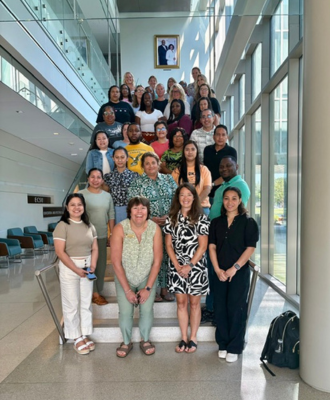
That vision brought nearly 40 teachers from nearly all 19 northeastern North Carolina
school districts to Elizabeth City State University (ECSU) on June 16-17 for the Summer
Northeast Math Professional Development, a regional initiative in mathematics instruction.
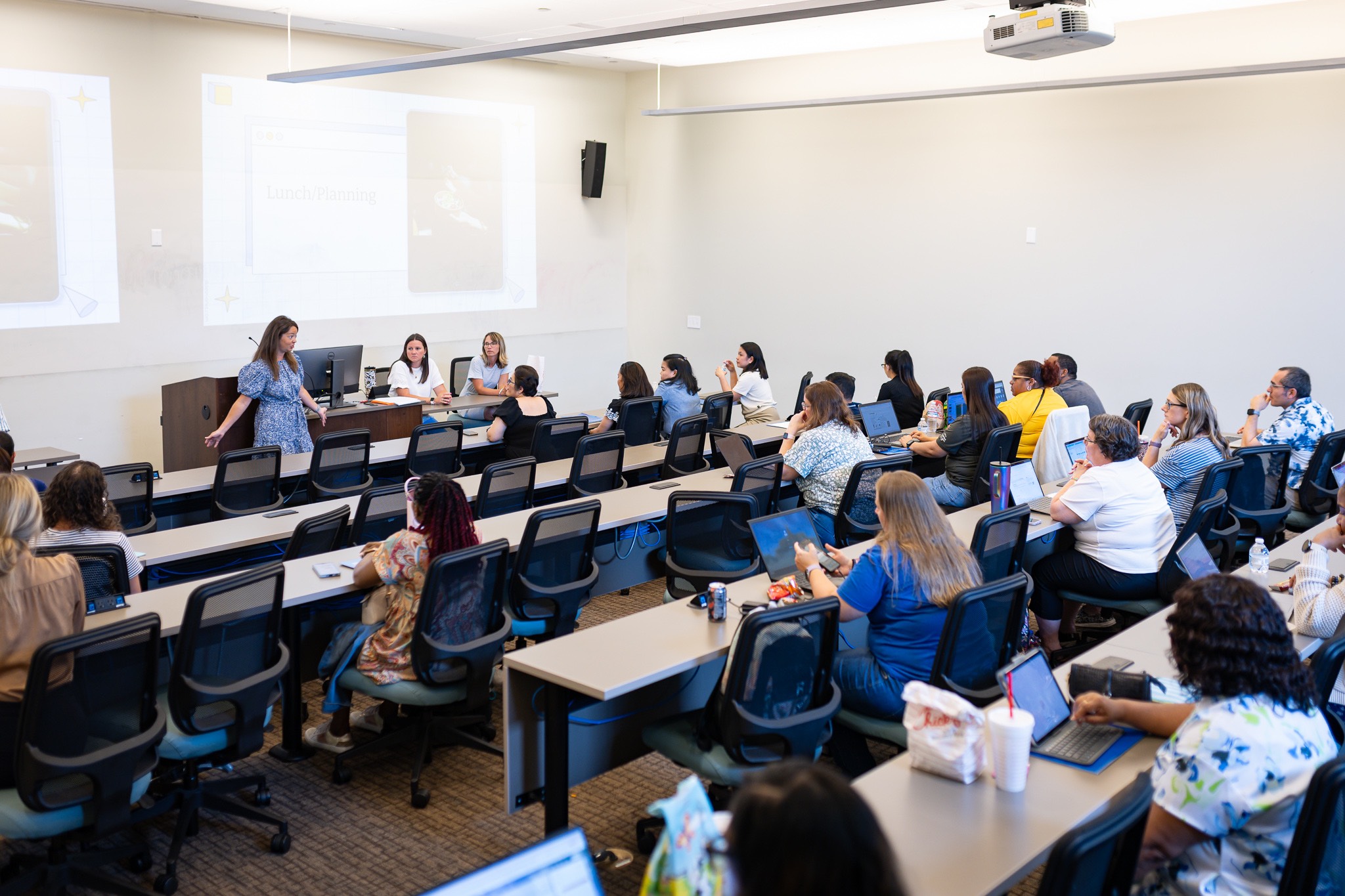
The two-day Summer Northeast Math Professional Development brought together classroom teachers, higher education faculty and NCDPI leaders to strengthen mathematics instruction through collaboration, research-based strategies and shared expertise. Participants engaged in interactive sessions designed to deepen student engagement, mathematical reasoning and problem-solving while building a network of educators committed to improving student outcomes across the region.
The workshop was a collaborative effort between ECSU and the NCDPI, with sessions led by veteran classroom educators Jessica Polk of Dare County Schools, Jennifer Brickhouse of Tyrrell County Schools, Leasa Roach of Roanoke Rapids City Schools and Diane Davenport of Currituck County Schools. The event was facilitated by assistant professor Lyndsay Britt, Ed.D, of ECSU, Betsy Hicks of NCDPI and Julie Thompson, Ed.D.
The event also provided opportunities for teachers to network with colleagues across district lines and begin planning for the upcoming 2026-27 academic year.
“As we continue to build capacity within our region, it is critical that we intentionally connect educators and leaders in role-alike groups,” Britt said. “Many of our districts have teachers and staff who serve as the sole person in their role. Collaboration opportunities connect them with peers, providing support, shared expertise and a sense of community.”
Polk, one of the featured presenters, said the collaborative atmosphere allowed educators to exchange ideas that can immediately impact student learning.
“It was inspiring to learn about the work happening in their schools and communities and to hear their perspectives on the strategies we explored together,” Polk said.
Participants said the workshop provided practical strategies they can implement in their classrooms.
“The sessions were very impactful for me,” said Sandra Staple, a mathematics teacher with Perquimans County Schools. “During the sessions, I learned about how to have students track their own performance. It is a game changer.”
The workshop equipped educators with strategies to elevate classroom instruction,
including techniques for transforming basic Depth of Knowledge (DOK) Level 1 questions
into more rigorous Level 3 questions that promote critical thinking, reasoning and
deeper student engagement. 
Organizers said the regional learning community reflects an ongoing commitment to building partnerships among K-12 schools, higher education and state education leaders while leveraging the expertise of classroom teachers to improve mathematics instruction across northeastern North Carolina.
“As someone who works in the ECSU Department of Education, I have a deep passion for helping build strong communities of learners across the Northeast region,” said Britt.
Beyond individual takeaways, the professional development helped educators explore ways to create classroom environments where problem-solving becomes central to daily instruction.
Thompson encouraged district leaders to identify their “rockstar” mathematics teachers—educators whose expertise and passion could strengthen teaching and learning across the region, laying the foundation for a collaborative learning community that highlighted the power of teachers learning from teachers.